


Birds perched on a transmission line at sunset. © Underworld / Shutterstock
Chongón–Posorja Transmission Line: advancing toward bird-friendly energy infrastructure
Latin America and the Caribbean will need larger, safer and more reliable electricity grids to respond to growing energy demand. In Ecuador, the Lago de Chongón–Posorja Transmission Line shows how early planning, applied science and bird-friendly criteria can help expand this infrastructure without increasing risks to biodiversity.
We often see birds perched on power lines in cities, rural areas and along roads. For many people, this image is part of the everyday landscape: a bird resting quietly on an electrical wire or small groups perched on poles and other structures. But what may look like an ordinary scene from the ground is, from the air, part of a much more complex relationship between infrastructure, landscapes and wildlife.
Electricity grids connect cities, ports, industries, homes and essential services. But a transmission line is not built across a blank map: it crosses living landscapes where communities, ecosystems and species coexist and depend on landscape connectivity. For millions of birds, these landscapes include habitats, feeding grounds, resting areas, nesting sites and flight routes that are essential to completing their life cycles. Every new line therefore not only defines a route for energy, but also raises a question about how development can be integrated with the ecosystems around it. When infrastructure is not properly planned, designed or managed, it can disrupt this connectivity and increase risks to wildlife, particularly birds.
This coexistence will become increasingly important. In the 1950s, Latin America and the Caribbean had around 160 million inhabitants and a predominantly rural population. Today, the region is home to more than 660 million people, with over 80% living in cities. In just a few decades, the region has not only grown; it has also transformed the way it produces, moves, trades and consumes energy. This transformation has increased pressure on electricity systems and helps explain why regional electricity demand will continue to grow over the coming decades. According to the International Energy Agency (IEA), electricity demand could increase by nearly 90% by 2050 under current policies, and by as much as 180% if announced climate commitments are met, driven by the electrification of transport, industry and other sectors that are key to the energy transition.
Meeting this increase will depend not only on generating more electricity, but also on having grids capable of delivering it safely, reliably and efficiently to where it is needed. Yet as this infrastructure becomes increasingly important for regional development, so too does the need to design it with greater awareness of the landscapes it crosses. In the case of birds, this perspective is particularly important because power lines can become barriers or threats within landscapes that many species use to move, feed, rest or reproduce.
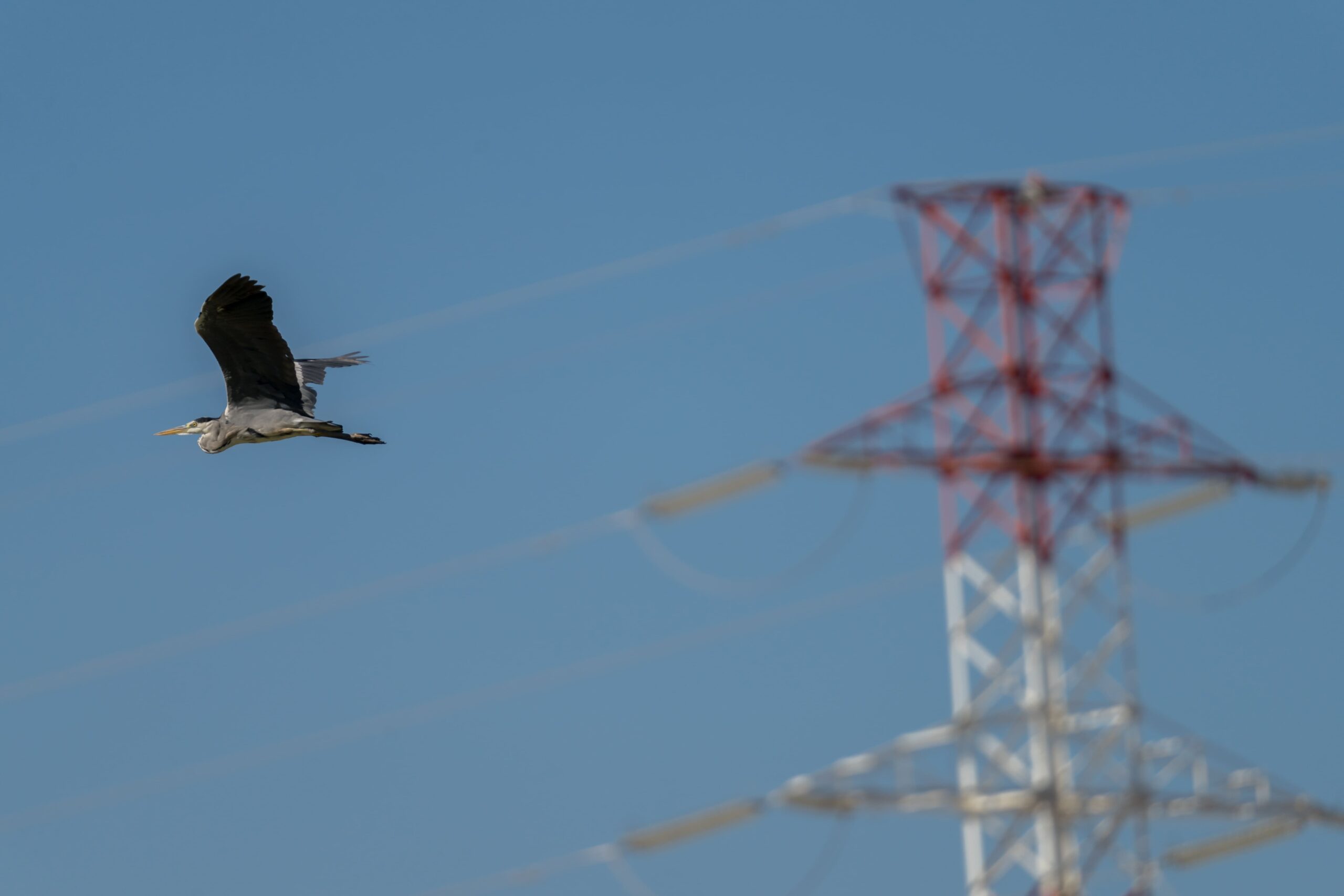
For birds, the most direct risks associated with power lines are typically electrocution and collision. Electrocution occurs mainly when a bird comes into contact with energized components, while collisions occur when wires or structures intersect flight paths. However, the level of risk is not the same in every situation: it depends on the design of the line, the landscape it crosses, the species present and how birds move through that territory.
Even seemingly simple factors can increase vulnerability. On rainy days, for example, wet plumage can increase the risk of electrocution because water facilitates electrical conduction. Likewise, in areas where some species move at night, poor visibility of infrastructure can increase the risk of collision, particularly when lines or structures are difficult to detect in low-light conditions. These kinds of details are a reminder that prevention cannot rely on generic solutions: it must respond to the local context, the species present and the specific conditions of each site.
The scale of the challenge is clearly illustrated in a recent International Union for Conservation of Nature (IUCN) report on power lines and wildlife. Although Latin America and the Caribbean still lack a consolidated regional estimate, the report includes figures that help illustrate the magnitude of the problem: in the United States alone, collisions with power lines may cause between eight and 57 million bird deaths each year, while electrocution could account for as many as 64 million. These figures should not be directly extrapolated to the region, but they do show why prevention through planning and design is so important.
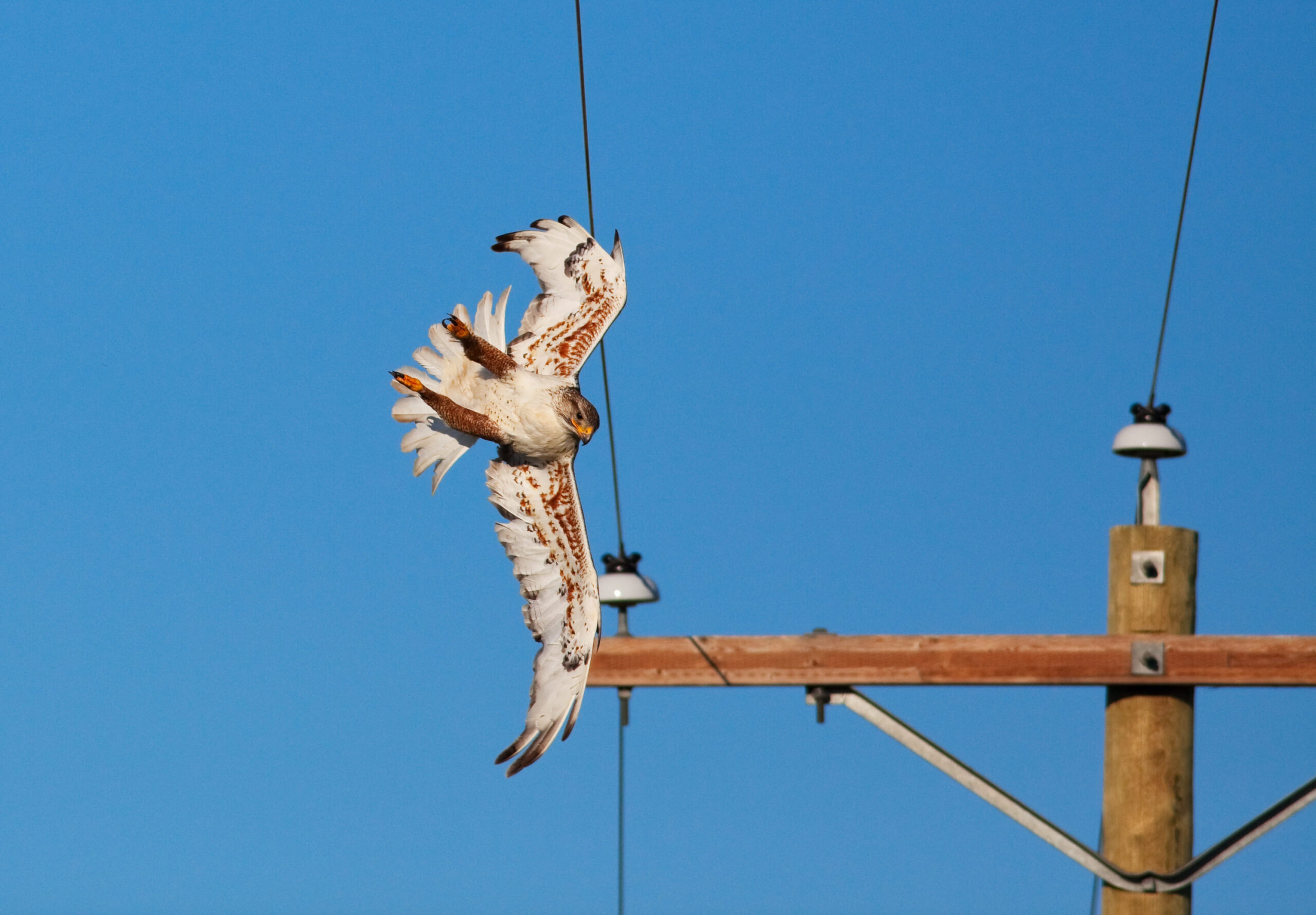
Chongón–Posorja: strategic infrastructure in a vital corridor
In Latin America, this preventive approach is beginning to take shape through concrete projects. One of them is located on Ecuador’s southwestern coast: the Lago de Chongón–Posorja Transmission Line. The project forms part of an approximately USD 200 million investment led by CAF – Development Bank of Latin America and the Caribbean – and the Ecuadorian Electricity Corporation (CELEC), the state-owned company responsible for electricity generation and transmission in the country. Its purpose is to connect hydroelectric generation with shrimp-farming complexes along Ecuador’s coast, reducing dependence on fossil fuels and contributing to the country’s energy security. As with other renewable energy projects, including wind and solar, the challenge does not end with generating cleaner energy: it also involves building networks capable of transmitting it while reducing impacts on the environment and ecosystems from the design stage.
This is where science, conservation and finance converge in a concrete proposal: the Americas Flyways Initiative (AFI). Led by Audubon, BirdLife International and CAF, the initiative works at the intersection of conservation, applied science and finance to protect migratory corridors across the continent. In Chongón–Posorja, this approach translates into a concrete action: incorporating bird-friendly and bird-safe criteria along the line’s 69-kilometre route.
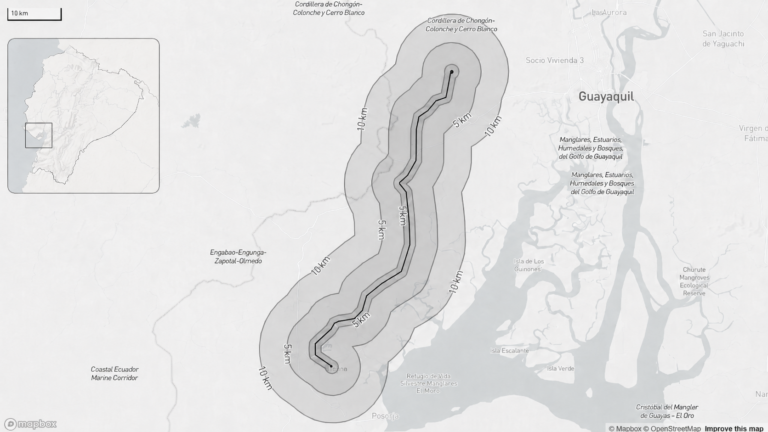
In this area, AFI’s technical analysis for the project identified remarkable bird diversity: 382 species recorded, including 56 migratory species and 30 AFI focal species, primarily long-distance migratory shorebirds. The analysis also identified 63 species at medium and high risk of collision, including the Great Green Macaw (Ara ambiguus) and the Grey-cheeked Parakeet (Brotogeris pyrrhopterus).
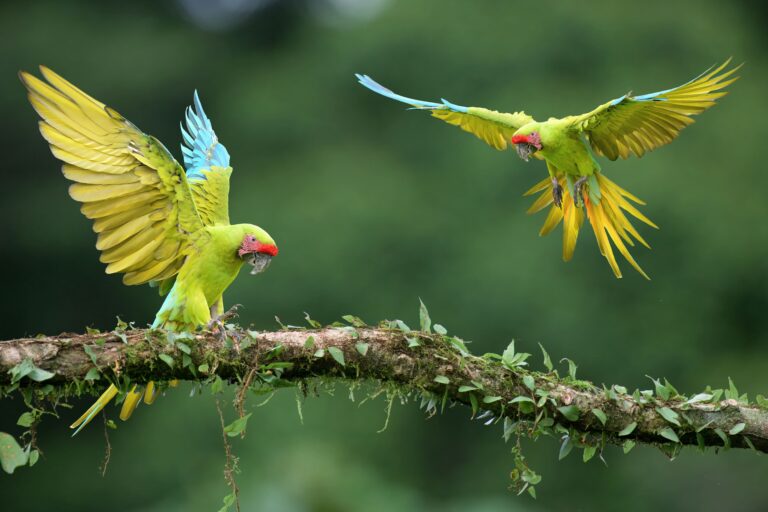
AFI’s contribution goes beyond a single recommendation. With support from Aves y Conservación, BirdLife’s Partner in Ecuador, the initiative combined technical review, geospatial analysis and biodiversity information to identify potential risks to birds and guide measures from the project design stage. This work made it possible to develop recommendations aligned with the mitigation hierarchy and CAF’s Biodiversity Safeguard, ranging from the installation of flight diverters, or bird diverters, to systematic collision monitoring and adaptive adjustments based on scientific evidence.
The ecological sensitivity of the area helps explain why this approach is particularly relevant. According to the analysis, the route passes approximately one kilometre from the Parque Lago National Recreation Area and two strategic Key Biodiversity Areas (KBAs): Cordillera Chongón-Colonche and Cerro Blanco, and Mangroves, Estuaries, Wetlands and Forests of the Gulf of Guayaquil. Together, these landscapes form an ecological corridor of high importance for migratory birds.
This experience also draws on elements of the Bird-Friendly Infrastructure Guide developed by AFI. In this sense, Chongón–Posorja serves as a concrete implementation test: a way of moving from theory to practice by applying science to advance conservation within a national-scale energy project.
“Transmission lines are essential for delivering electricity to homes and businesses, but they can also pose a significant challenge for migratory birds.”
Tris Alinson
Senior Conservation Scientist, BirdLife International
At AFI, we promote the application of the mitigation hierarchy, which is based on a simple principle: before thinking about how to offset the impacts of a project, we should first ask how they can be avoided or reduced through design.
In energy projects, this means assessing from the outset whether alternative locations or routes could reduce risks to birds and biodiversity. Tools such as AVISTEP, developed by BirdLife International, help identify the areas most sensitive for birds and guide electricity grid expansion in a way that is more compatible with nature.
In other words, integrating biodiversity from the planning stage makes it possible to develop more sustainable infrastructure while reducing environmental risks, future costs and potential conflicts.
From monitoring to scale
Designing a transmission line according to bird-friendly criteria is only the first step. To understand whether these measures work, it is necessary to observe what happens on the ground once infrastructure begins to be built and operated. Monitoring makes it possible to identify critical areas, understand how birds use the landscape, assess whether mitigation measures are effective and adjust decisions based on evidence.
In a region where data on interactions between power lines and birdlife remain limited, every well-documented project can contribute valuable knowledge to improve the planning of future infrastructure. This is a major part of the value of the Chongón–Posorja project: not only reducing risks along one specific line, but also generating lessons, tools and evidence so that bird-friendly criteria can be progressively incorporated into future energy infrastructure investments.
In fact, the experience is already generating interest in replicating this approach in new transmission lines in Ecuador, showing how the integration of science and biodiversity can move from a pilot project toward a scalable model for sustainable development.
“Flight routes can vary by season, species use the landscape in different ways, and risks can become concentrated along specific sections. That is why monitoring is essential.”
Ana Agreda
Coordinator, Priority Sites Programme for
Migratory Waterbirds, Aves y Conservación
This vision responds to one of the central challenges of our time: developing the infrastructure that Latin America and the Caribbean need to grow without sacrificing the ecosystems on which their future depends. With a USD 40 billion commitment over the next five years focused on sustainable growth and climate action, including a just energy transition and the conservation of strategic ecosystems, CAF is advancing an agenda in which infrastructure not only connects territories, but can also help protect them.
“At CAF, we understand that climate action, biodiversity conservation, the energy transition and resilient infrastructure are pieces of the same puzzle. The Chongón–Posorja Transmission Line is a concrete example of how electricity infrastructure can be designed to reduce emissions and strengthen the energy transition, while protecting migratory bird corridors and the region’s strategic ecosystems.”
Alicia Montalvo
Manager of Climate Action and Positive Biodiversity, CAF
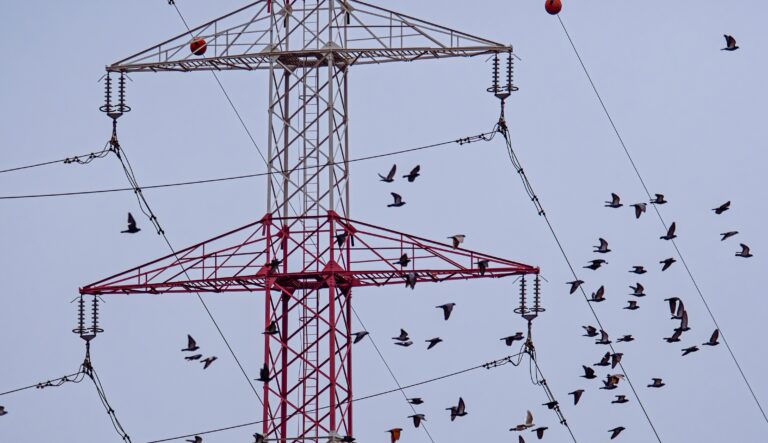
Latin America will need more and better energy infrastructure. The question is not whether electricity grids should expand, but how they should do so. Every new transmission line can strengthen supply security, connect territories and support economic development. But it can also do so in a way that is more compatible with biodiversity, incorporating measures from the design stage to reduce risks to birds and other components of ecosystems.
This approach also offers benefits that extend beyond conservation. IUCN cites estimates suggesting that, in some parts of the world, between 10% and 23.5% of power outages in electricity systems may be associated with bird-related incidents. Reducing these interactions can therefore not only help protect biodiversity, but also strengthen service reliability and operational risk management.
Bird-friendly energy infrastructure offers a smarter way to respond to this challenge. It does not seek to stop development, but to improve the decisions behind it: planning better, avoiding sensitive areas, designing with biodiversity criteria, monitoring impacts and adjusting measures based on evidence.
Along the Lago de Chongón–Posorja Transmission Line, AFI is helping to demonstrate that this approach can move from recommendation to implementation—and that the energy future of the Americas can be built sustainably, connecting cities, ports, industries and homes without disconnecting the natural corridors that sustain life across the continent.
By Santiago Aparicio, AFI Senior Director